
Cabinet Painting in Overland Park, KS
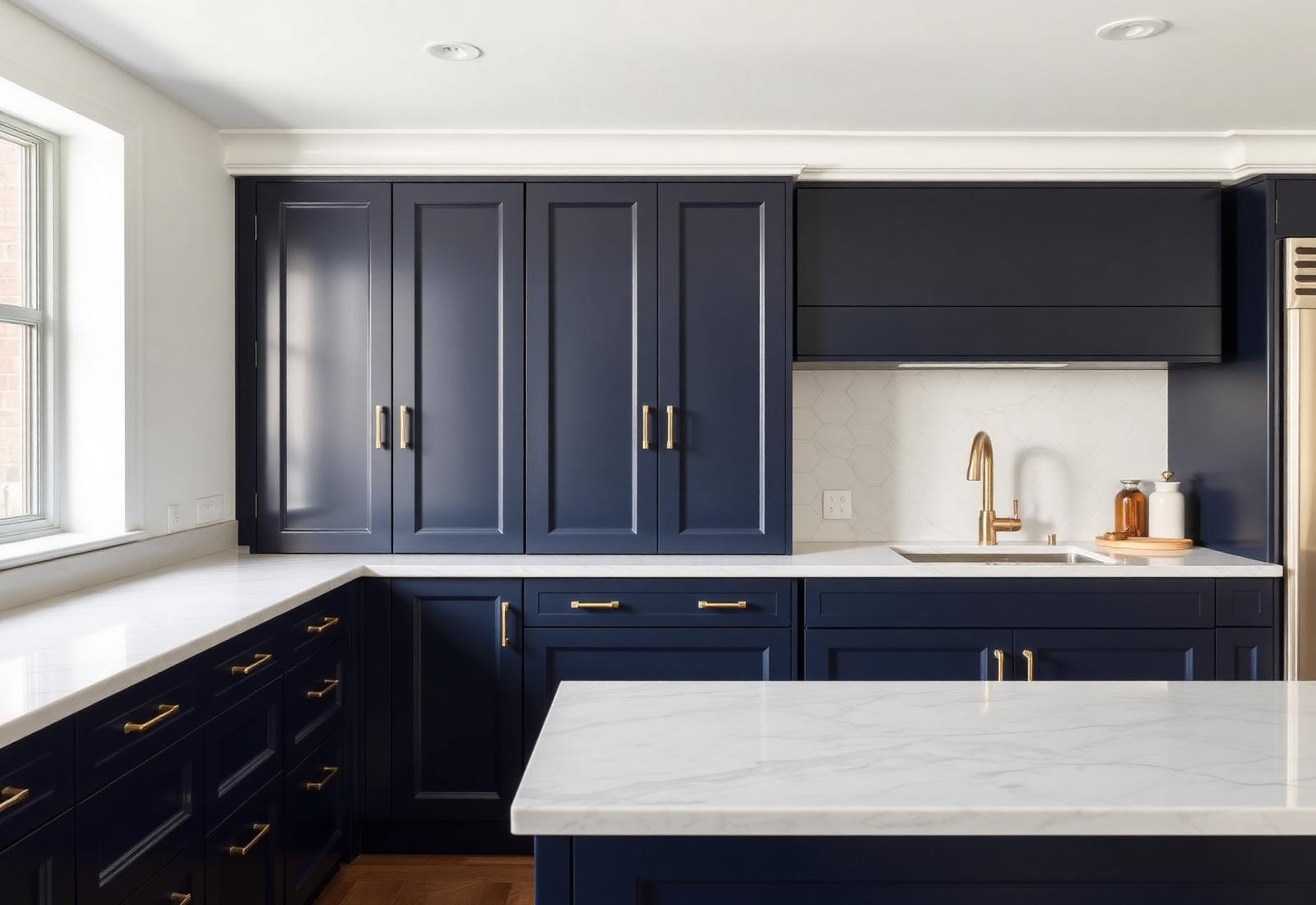
Cabinet painting is one of the most requested projects I take on in Overland Park — and for good reason. You keep the solid boxes you already have and the kitchen comes back with a smooth, sprayed finish.
The difference is the process: degrease, full sanding, bonding primer, then sprayed finish coats. It's the same multi-step approach I learned doing custom finishes with interior designers, and it's why the result looks like new cabinetry instead of a DIY job.
Grain, and the decision that defines the finished look
The biggest choice on an Overland Park cabinet project usually isn't color, it's grain. Oak cabinetry has deep open grain, and a painted finish either fills it or shows it. Filling means applying grain filler and sanding it back, sometimes across two passes, so the door faces read as smooth new cabinetry. Leaving it means the color changes but the grain texture stays visible. Both are legitimate looks — I just want you to pick one deliberately, because it's the step most quotes leave out and the reason painted oak sometimes still looks like painted oak.
Before any of that, degreasing. Kitchen doors carry cooking grease and hand oil, heaviest around the range and either side of the sink, and paint does not bond through it. Then every face, edge, rail, and stile gets sanded — the factory finish on cabinetry is usually a hard catalyzed varnish engineered specifically to resist things sticking to it, so abrading it is not optional. What a sander can't reach gets hand-worked or deglossed, and dust gets vacuumed and tacked rather than blown around.
How it runs in your kitchen
Doors, drawer fronts, and shelves come off and get labeled so every piece returns exactly where it started, with hinges and hardware bagged by location. Those pieces get sprayed on racks in a contained area, both sides, positioned to avoid runs at the panel edge. Boxes and face frames stay put and get sprayed in place behind full masking — counters, backsplash, appliances, sink and faucet, floors, adjacent walls, doorways sealed, HVAC returns covered so overspray doesn't ride the ducts through the house.
A bonding primer goes on next because it's built to grip that slick factory finish, with a stain-blocking primer where tannin or water staining could bleed yellow through a light color. Primer gets sanded, which is what makes the first finish coat feel like glass. Then two sprayed coats of a cabinet-grade enamel that cures hard rather than staying soft.
Most kitchens run several days to about a week, and most families keep using the kitchen through it. The finish keeps hardening for days after it looks done, so I'll tell you specifically how long to hold off on shelf liner, stacking dishes directly on shelves, and closing doors briskly. That first couple of weeks is most of what decides how the kitchen looks in year five.
Services in Overland Park
Each service has its own page with the full process — prep sequence, materials, timelines, and what gets checked before the job is called done.
Towns we serve
- Overland Park
- Leawood
- Prairie Village
- Lenexa
- Olathe
- Shawnee
- Mission
Common questions
It comes down to door and drawer count, kitchen layout and access, the condition of the existing finish, and whether you're changing color or refreshing the same one. Those change the prep and spray time on every project, which is why I walk the kitchen before quoting instead of guessing over the phone. The walkthrough is free and you get an exact number in writing.
Doors and drawer fronts are sprayed for a factory-smooth finish. Boxes are prepped and finished in place with careful masking so the rest of your kitchen stays clean.
Most kitchens take about a week from prep to final coat, including cure time so the finish hardens properly before doors go back on.
Ready to bring your color to life?
Tell me about the project and I'll come walk it with you — no pressure, no sales pitch.