
Signs of Wood Rot on Kansas City Homes (And Where to Look First)
Kansas City's weather is hard on exterior wood. Rot almost always shows up in the same handful of places, and it's very fixable if you catch it early. Here's where to look first.
Published August 30, 2026
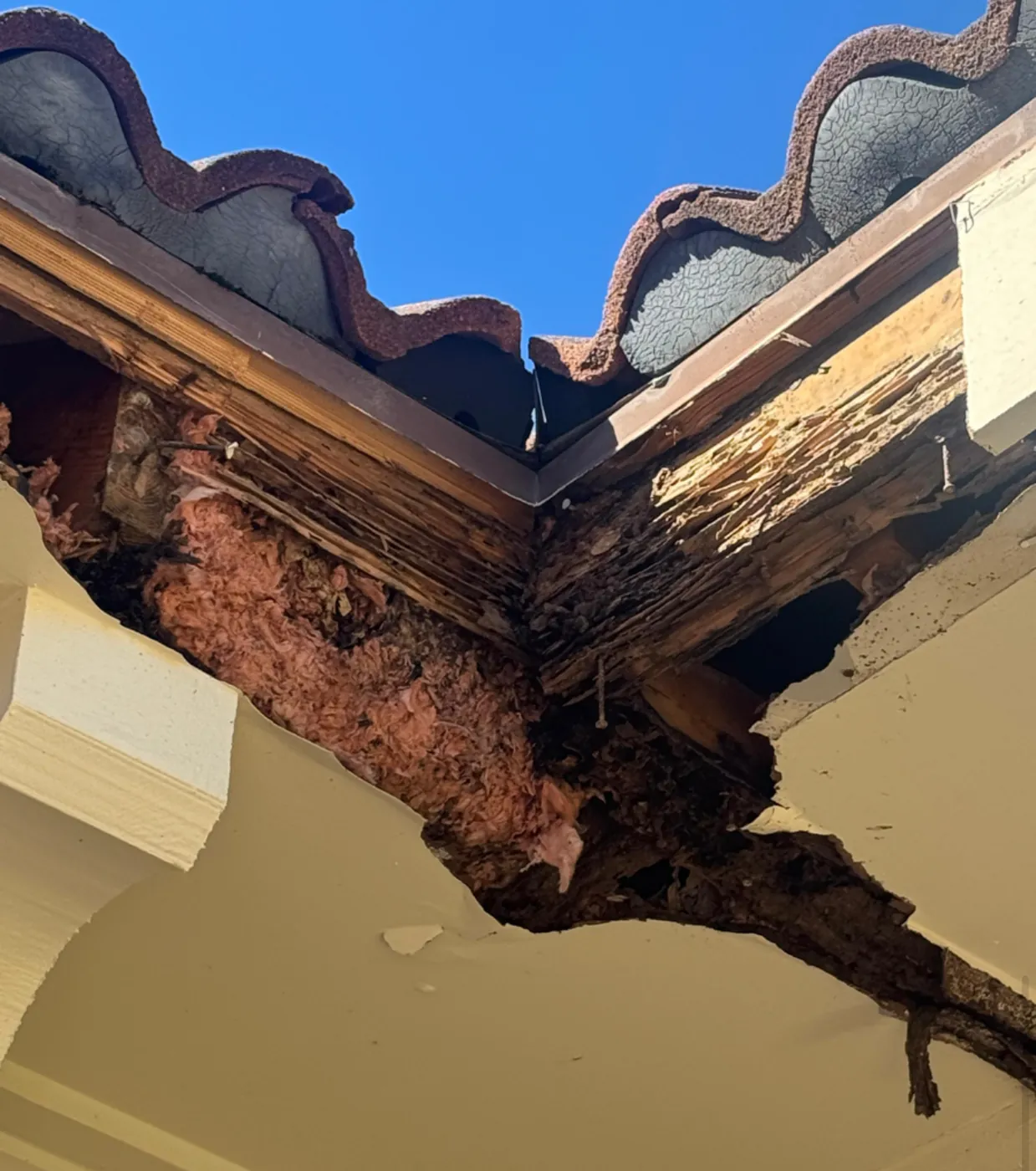
Kansas City's weather is hard on exterior wood. We go from humid, sticky summers to freeze-thaw winters, sometimes within the same week in March or November. That freeze-thaw cycle is what really does the damage — water gets into a seam or a crack in the paint film, freezes overnight, expands, and pries the wood open a little wider. Do that a few dozen times a year for a few years running, and you end up with soft, spongy trim that looked fine from the driveway.
We run into wood rot on almost every older home we work on in the metro, from Brookside to Overland Park to Lee's Summit. The good news is that rot almost always shows up in the same handful of places, and it's very fixable if you catch it early. Here's where to look, what it looks like at each stage, and how we handle it when we find it.
Roof valleys and fascia
Fascia boards — the trim that runs along the edge of your roofline — take a beating because they sit right where roof runoff, gutters, and exposed end grain all meet. Roof valleys concentrate a lot of water in one spot, so fascia below a valley is often the first place to go.
What to look for: paint that's bubbling or peeling in a straight line along the roof edge, a fascia board that looks slightly wavy instead of straight, or dark staining that doesn't wash off. If you can safely reach it, press a screwdriver handle into the wood — solid wood pushes back, rotted wood gives or crumbles.
Window and door frames
Window sills and the bottom corners of door frames are classic rot spots because water sheets down the glass or the door and pools right at the joint. Older wood-frame windows without good flashing are especially prone to it.
Signs here include a sill that feels soft when you press on it, paint that's cracked or lifted right at the corner joints, or a gap opening up between the frame and the siding. Sometimes the first clue is a window that's suddenly harder to open — swollen, rotted wood doesn't slide the way sound wood does.
Trim near the ground
Any trim within a foot or two of grade — corner boards, the bottom of porch posts, skirting around a deck — is exposed to splash-back from rain and, in winter, to snow piled against the house. It also tends to get the least sunlight, so it stays damp longer after a storm.
Look for discoloration that creeps up from the bottom, a slightly different texture than the wood above it, or small holes and soft spots that can also be a sign of insect activity, which often moves in once wood is already compromised.
Under damaged siding
This one's harder to catch because it's hidden. If a section of siding is cracked, has a gap, or was caulked poorly years ago, water can be getting behind it and rotting the sheathing or the framing underneath without any obvious sign on the surface — until the siding itself starts to bow or feel spongy when you press on it. This is one of the reasons we always recommend a full walk of the exterior before painting, not just a look at the parts that are visibly failing.
When it's a repair vs. a replacement
Most of what we find is a repair, not a full board replacement. If the rot is limited to a small section and the surrounding wood is still solid, we cut back to solid material, dig out everything soft, and rebuild that section with epoxy wood filler or a scarfed-in piece of new lumber, depending on the size of the area.
Full replacement makes sense when the rot has spread through most of the board's length, when it's structural (like a post or a sill that's carrying weight), or when the surrounding wood is already showing early signs of going the same direction. In that case, patching would just mean doing the job again in two years.
Why you never paint over rot
We get asked this more than you'd think — can you just fill it, sand it, and paint over it? The honest answer is no, not if you want it to last. Paint isn't structural. It'll look fine for a season or two, but rot is a living fungal process, and if there's still soft, damp wood underneath, it keeps spreading under the new paint film. You end up paying for the same repair again, except now there's more wood to replace.
Our process is always the same regardless of how small or large the spot is: cut back to solid wood, treat and prime the exposed area, rebuild or replace with properly primed lumber, caulk every seam, and only then apply the finish coats. It's more steps than just painting over a soft spot, but it's the difference between a repair that holds and one that doesn't.
If you're seeing any of these signs on your Kansas City home — or you're just not sure what you're looking at — we'll take a look and give you an honest read on whether it's a quick repair or something bigger. Call 913-704-4418 for a free walkthrough, or ask about our wood rot repair service when you reach out.
Frequently asked
It depends on how far the rot runs, whether it's trim, fascia, a window frame, or structure, and whether sheathing behind it is involved. We always give an exact number after seeing the damage in person — probing the soft area tells us how much has to come out, and that's not something to guess at over the phone.
Yes. Rot is caused by moisture and fungus, and if the source of that moisture (a gap, bad flashing, a clogged gutter) isn't addressed, it can keep spreading to wood that's in contact with or near the original spot. That's part of why we look at what caused it, not just the wood itself.
No — this is something we handle as part of the job. If we spot rot during a walkthrough or once we start prepping the surface, we'll point it out, explain the repair, and get your sign-off before doing anything.
Usually not, since it's considered a maintenance issue rather than sudden damage. That's part of why catching it early matters — a small trim repair is a far smaller job than letting it turn into a siding or structural replacement.
Keep reading
Ready to bring your color to life?
Tell me about the project and I'll come walk it with you — no pressure, no sales pitch.